
A damaged uk passport can derail a trip before you reach security. If check-in staff, a visa centre, or a border officer can’t trust the document’s condition, you may be refused boarding or forced into a replacement process immediately. The right response depends on where you are, how severe the damage is, and whether you need a short-term fix or a long-term backup.
For professionals, this usually isn’t a minor admin problem. It’s missed meetings, rescheduled visas, rerouted staff, and avoidable pressure on HR or travel teams. The practical question is simple. Is your passport still usable, or has it crossed the line into official damage?
Your Travel Plans Are at Risk
The most common version of this problem starts at the worst possible moment. You hand over your passport at check-in, the agent pauses, opens it again, rubs a thumb across the photo page, and calls a supervisor. That pause is enough to put an entire trip at risk.
Business travellers often assume a passport is fine if it still looks broadly intact. Her Majesty’s Passport Office (HM Passport Office (HMPO)) uses a stricter standard. A passport can be treated as damaged if key details are unreadable, pages are ripped or missing, the cover is cut or detached, or pages are stained. Minor wear is one thing. Damage that affects trust in the document is another.
That distinction matters because an airline doesn’t need to prove fraud to stop you travelling. Staff only need enough concern about the document’s condition to decide it may not be accepted at destination. Once that happens, your options narrow fast.
What usually causes the problem
In practice, I see the same issues repeatedly:
- Water exposure: rain, spills, damp luggage, or documents stored near toiletries
- Peeling or lifting laminate: especially on the personal details page
- Torn visa pages: often from heavy use at consulates and border desks
- Cover separation: where the booklet starts to detach at the spine
- Unreadable details: faded print, marks over the biodata page, or damaged machine-readable areas
A passport doesn’t need to look destroyed to become a travel risk. It only needs to look unreliable.
The business impact is bigger than commonly realized. A damaged passport can interrupt a live visa application, prevent onward travel, or leave someone abroad without a full-validity document while they wait for replacement. For airline crew, rotational workers, executives, and staff moving between politically sensitive destinations, the disruption spreads beyond one trip.
The rest of the guide focuses on what works. First, how to judge whether your passport is damaged. Then, how to choose the right replacement route. Finally, how frequent travellers reduce this risk in future by treating passport resilience as part of operational continuity.
How to Assess Your Passport's Condition
The safest way to assess a damaged uk passport is to stop thinking like the holder and start thinking like the examiner. HMPO’s standard is technical, not sentimental. A passport can look “well travelled” to you and still fail scrutiny.

According to HMPO guidance on replacing a damaged passport, a passport is treated as damaged where there are unreadable personal details, ripped, cut or missing pages, holes, cuts or rips in the cover, a detached cover, or stained pages such as ink or water damage. The same guidance also makes clear that minor wear and tear is usually handled as a standard renewal rather than a damage replacement.
Start with the personal details page
This is the first place airlines and border officials focus.
Check for:
- Blurring or fading: if your name, date of birth, passport number, or photo area isn’t crisp, expect questions
- Lifted laminate: if the film over the biodata page is bubbling, peeling, or separating, staff may suspect tampering
- Marks across key details: pen, water streaking, or abrasion can make the page unreliable
If you need to tilt the passport under light to “make it readable”, that’s already a warning sign.
Then inspect the structure of the booklet
A passport has to survive handling by multiple parties. If the booklet’s structure looks compromised, trust drops quickly.
Look closely at:
- The cover attachment: a loose or detached cover is a serious issue
- The spine: splitting, tearing, or heavy distortion can suggest the passport is no longer secure
- Interior pages: even one torn or missing page can trigger refusal, especially if it affects visas, entry stamps, or page numbering
Stains and water damage are rarely harmless
People underestimate this one. Water damage doesn’t need to soak the whole booklet to create a problem. Rippling, swollen paper, blurred print, staining, or warping can all matter.
Practical rule: if the passport has changed shape, texture, or legibility because of liquid, treat it as high risk.
Ink marks are similar. A small accidental mark may be harmless. A stain that crosses printed details, chips away at visibility, or affects multiple pages is different.
What counts as normal wear
Not every scuff means immediate replacement. HMPO distinguishes between damage and ordinary use. That means a passport may still be acceptable if it has:
- Light cover rubbing
- Minor corner softening
- General signs of frequent handling
- Small cosmetic marks that don’t affect details or page integrity
The difficulty is that normal wear can shade into damage gradually. A frequent flyer may not notice that yesterday’s acceptable booklet now looks questionable after one more wet journey, one more tight bag, or one more rough courier return.
When not to gamble
Don’t test a borderline passport on an essential trip if any of the following apply:
- You’re flying for a fixed business event and can’t absorb a check-in refusal.
- You have a live visa process that depends on document integrity.
- You’re travelling through multiple jurisdictions where one refusal disrupts the entire itinerary.
- Your passport has visible structural or biodata-page issues that would be obvious on inspection.
At that point, the issue isn’t whether you might get through. It’s whether the risk is commercially sensible. For most professionals, it isn’t.
Choosing Your Replacement Strategy
Once you’ve decided the passport is no longer safe to use, the next step is choosing the least disruptive replacement path. The right option depends on location, urgency, and whether you need a full-validity passport or a way home.

One point is worth keeping in mind before you choose. GOV.UK passport statistics show over 83,000 Emergency Travel Document applications for lost, stolen, or damaged UK passports abroad between 2019 and 2023, with 22,000 in 2023 alone. The same data shows disruption can cost travellers hundreds of pounds once rescheduled plans and travel to an embassy are factored in. That’s why replacement method matters. A technically available option isn’t always the operationally sensible one.
The three routes in practice
| Method | Best For | Typical Timeline | 2026 Cost (Est.) | Validity |
|---|---|---|---|---|
| Standard online application | Travellers in the UK who can wait and want the normal official route | Standard processing | Official HMPO fee applies | Full-validity passport |
| Emergency Travel Document | Travellers abroad who need to complete urgent travel after loss, theft, or damage | Emergency case handling | Varies by official emergency process | Limited emergency travel use |
| Expedited agency-managed route | Professionals who need a full-validity passport with tighter handling and less room for error | Faster managed submission path | Higher than standard route overall | Full-validity passport |
Standard online application
This is the default route for many applicants. It works well when the damage is clear, the applicant is in the UK, and travel isn’t immediate.
Its strengths are obvious. It’s familiar, direct, and appropriate for straightforward cases. If you need to replace the passport and can tolerate ordinary processing, this is usually the cleanest path.
Its weakness is timing and rigidity. If you have flights booked, visa appointments pending, or employer deadlines attached to travel, the standard path can feel slow because you’re entering the queue without any strategic buffer.
For applicants weighing official fees against urgency, it helps to understand the wider renewal cost picture. This overview of the cost to renew a passport is useful when budgeting the replacement route against business disruption.
Emergency Travel Document
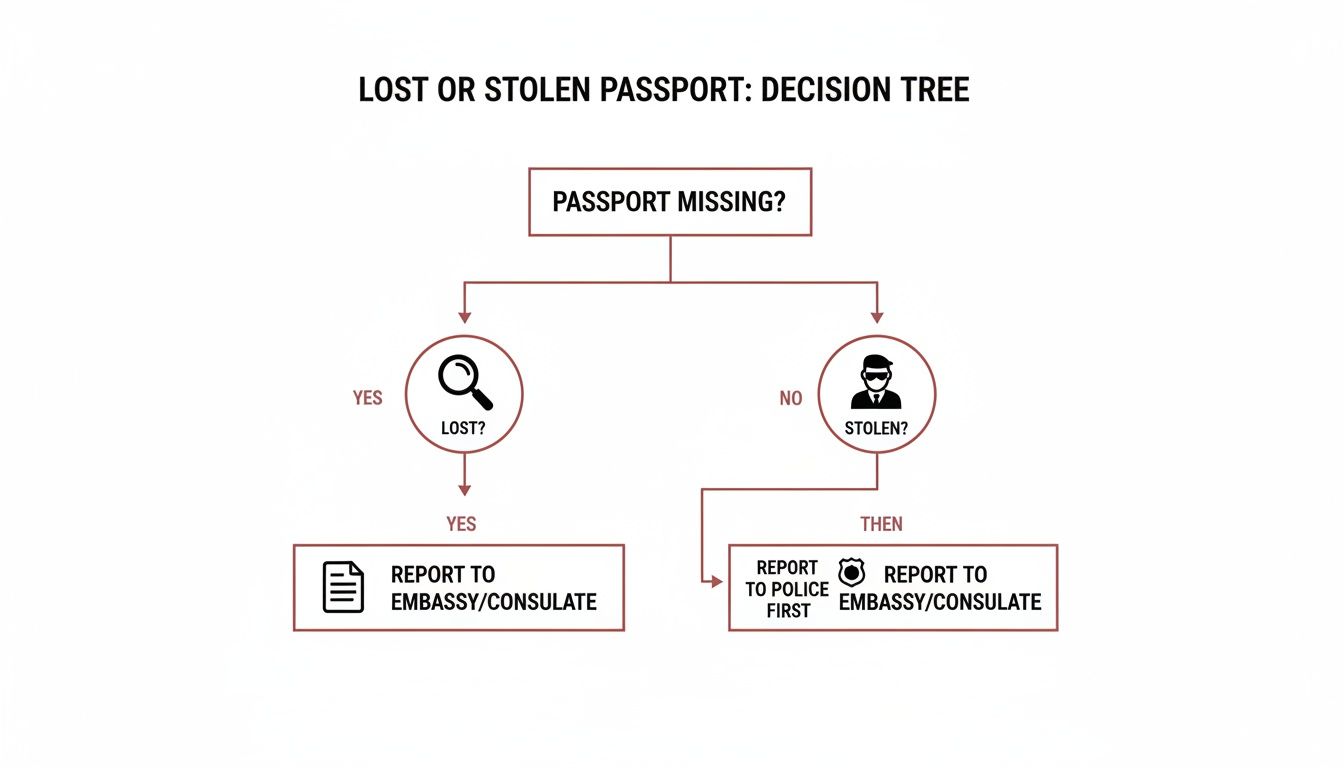
An Emergency Travel Document, or ETD, is the route many only learn about after something has already gone wrong abroad. It can be the right answer if your priority is to finish an urgent journey or return home when your main passport can’t be used.
But it’s not a substitute for a normal passport. It’s a problem-solving document, not a continuity document.
In practice, ETDs work best when:
- You’re already overseas: and cannot wait for a full passport issue
- Your route is limited and defined: rather than open-ended business travel
- You need legal travel authority quickly: not a long-term document for ongoing trips
If you have meetings in several countries, need continued visa activity, or must remain mobile after the immediate trip, an ETD often solves too little.
Expedited agency-managed route
This route makes sense when speed, document accuracy, and case handling matter more than finding the cheapest route. Professionals use it when a damaged passport threatens a work-critical schedule and they can’t afford an avoidable mistake in the submission.
The fastest route isn’t always the official label with the shortest headline. It’s the route with the fewest preventable errors.
What usually makes this route effective is the pre-checking. A damaged passport case can stall because the damage isn’t explained properly, supporting documents don’t line up, or the applicant chooses the wrong path for the facts. Managed handling reduces those failure points.
What usually works best
For a UK-based traveller without immediate flights, the standard online route is often enough.
For someone abroad who must move now, an ETD may be the only realistic emergency fix.
For executives, crew, rotational workers, and anyone with a narrow travel window, a managed expedited route is often the most practical option because it addresses the core issue. Not just getting any document, but getting the right document with the fewest operational surprises.
Applying for Your Replacement Passport
Once you’ve chosen your route, execution matters. Most delays don’t come from dramatic legal issues. They come from ordinary application mistakes that force HMPO to stop and ask questions.

The core rule is simple. If the passport is damaged, say so clearly and explain how it happened. HMPO examiners may ask for an explanation where the cause isn’t obvious, and vague answers tend to create friction.
Build the application properly the first time
For most applicants, the replacement process is straightforward when the documents are clean and the facts are consistent.
Use this checklist before you submit:
- Accurate damage declaration: describe what happened in plain language. Water spill, torn page, cover separation, courier damage. Keep it factual.
- Compliant photo: poor digital photos create needless delay. Use a current image that meets official standards.
- Matching personal details: names, dates, and supporting documents must align exactly.
- Correct supporting evidence: if any personal details have changed, include the required evidence from the outset.
- Careful packaging: if you’re sending documents physically, protect them properly. A damaged-passport case shouldn’t become more damaged in transit.
A short written explanation often helps. It gives the examiner context and avoids the impression that you’re being evasive.
What applicants abroad need to watch
International replacement cases are harder. That’s where many professionals get caught, especially if they’re living overseas and still expected to travel for work.
According to GOV.UK guidance on damaged British passports, British nationals living and working abroad often need extra identity evidence and can face processing delays of 4 to 6 weeks through standard international services. The same guidance highlights the practical problem many travellers hit. They may have to surrender the damaged passport, which can halt ongoing travel while the replacement is processed.
That matters for people with active visas, regional work rotations, or employer-managed travel calendars. If someone is posted abroad and their passport is also needed for identification, local compliance, or onward visa handling, surrendering it can create a chain reaction.
For a more detailed breakdown of urgent options, this guide to emergency passport replacement in the UK is a useful companion.
Common mistakes that delay damaged cases
Applicants usually run into trouble in a few predictable places:
- They understate the damage. Calling obvious damage “minor wear” rarely helps.
- They omit the cause. If the reason isn’t clear from inspection, HMPO may need clarification.
- They submit weak identity support from abroad. International cases often need more than people expect.
- They assume urgency changes the rules. It doesn’t. Urgency increases the cost of getting the paperwork wrong.
If your facts are simple, present them simply. The more a damaged-passport application looks improvised, the more scrutiny it invites.
A practical submission mindset
Treat the application as a document-verification exercise, not a customer-service request. HMPO needs to be satisfied that the passport is damaged, the holder is properly identified, and nothing about the condition suggests tampering or inconsistency.
That’s why honest, tidy, complete submissions tend to move better than clever ones. The aim isn’t to argue that the passport should still have been accepted. The aim is to secure a valid replacement without creating new questions.
The Proactive Solution A Second UK Passport
A damaged passport is usually handled as a replacement problem. For frequent travellers, that’s too narrow. The core issue is continuity.
A second British passport is a legitimate HMPO solution for people with a genuine need. It isn’t a loophole and it isn’t a novelty product. It exists because some travellers have real operational reasons for needing one passport available while the other is tied up, damaged, full, or committed to a visa process.

That need is easier to understand once you’ve seen a damaged passport shut down a live itinerary. In 2025, HM Passport Office recorded 90,219 digital applications for new UK passports specifically due to damage, a figure highlighted in reporting on UK passport disruption. For business travellers, that scale shows why a single-passport model can be fragile.
When a second passport makes commercial sense
This isn’t for every traveller. It’s for people whose work creates repeated document conflicts.
Common examples include:
- Overlapping visa applications: one passport is lodged at a consulate while the traveller still needs to fly
- Politically incompatible itineraries: travel between destinations where certain stamps create avoidable complications
- Airline crew and logistics roles: mobility isn’t optional. It’s part of the job
- High-frequency travel schedules: where one damaged or unavailable passport can interrupt multiple commitments at once
A second passport acts as a Plan B. More importantly, it acts as an operational tool rather than an emergency reaction.
The employer letter matters more than people think
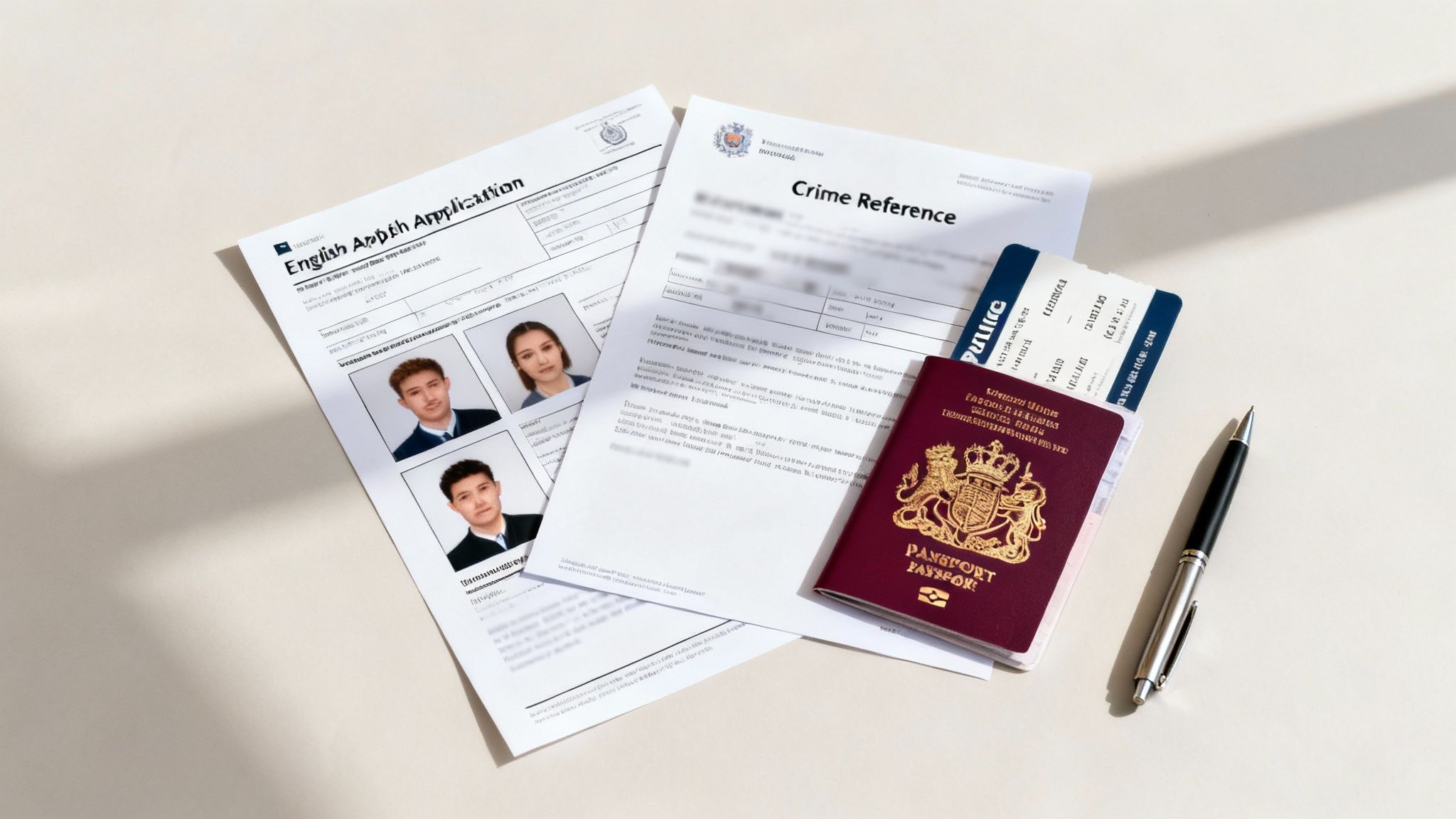
The strongest second passport cases are usually supported properly from the start. That means a clear employer letter on company letterhead, setting out the genuine business need in practical terms.
In agency practice, the support letter is often where weak applications fall apart. It should explain why one passport is insufficient for the role. For corporate applicants, a wet-ink signature remains the safest approach because it reduces doubt about authenticity and intent.
What works and what doesn’t
What works:
- a documented travel pattern
- a clear visa or routing conflict
- employer-backed operational need
- a tidy evidential package
What doesn’t work:
- vague convenience arguments
- casual wording that doesn’t establish necessity
- unsupported claims about future travel
- treating the second passport as a lifestyle perk rather than a business requirement
For readers assessing whether this route may fit their role, these notes on British passport applications give useful context around application scenarios and supporting evidence.
Why a Valid Passport is Non-Negotiable in 2026
A damaged passport has always been risky. In 2026, it’s even less negotiable for people who need dependable access to the UK.
From 25 February 2026, the legal position tightens for British dual nationals. Under the 2026 rule described in the brief for this article, carriers may require a valid British passport or a digital Certificate of Entitlement (COE) for UK entry. Relying on a foreign passport alone is no longer the simple fallback many people assumed it was.
That change matters because airline staff make boarding decisions before you ever reach the UK border. If your British status is clear but your British passport is expired, unavailable, or damaged, the problem can begin at check-in rather than on arrival.
The same 2026 situation also matters because British citizens aren’t eligible for the new Electronic Travel Authorisation (ETA) route. In practical terms, that removes another possible workaround. If you’re British, the cleanest way to travel to the UK remains having a valid, usable British passport.
What this means in practice
For travel managers and individual professionals, the takeaway is operational, not theoretical:
- A borderline passport is no longer worth testing
- A damaged document can create carrier issues before departure
- Dual nationality doesn’t automatically solve a damaged British passport problem
- A valid British passport should be treated as core travel infrastructure
This is not optional. In 2026, document readiness is part of trip readiness.
Frequently Asked Questions About Damaged Passports
Will HMPO return my damaged passport
Usually, yes. The verified guidance in the brief notes that, in most instances, the damaged passport is returned to the customer after review. That matters because even an invalidated or replaced passport can still be useful as a record of travel history and previous visas.
Is normal wear and tear the same as damage
No. HMPO distinguishes between ordinary wear and actual damage. A used passport with light scuffing or minor cosmetic ageing may still go through as a standard renewal. Once details become unreadable, pages are torn or missing, the cover detaches, or staining affects the document, you’re in damaged-passport territory.
Should I try travelling if the passport only has slight damage
If the trip matters, don’t rely on “slight” as your test. The real question is whether an airline employee or border officer could doubt the document’s integrity at a glance. If the answer is yes, treat the passport as a risk and replace it before travel.
Border decisions are often practical, not philosophical. If staff don’t trust the document quickly, your argument about how it was damaged won’t help much at the desk.
Can I replace a damaged passport from abroad
Yes, but it’s more cumbersome than expected. International cases often involve extra identity evidence and longer waits. The harder point is that surrendering the damaged passport can stop onward travel while the case is processed, which is why overseas professionals need to plan carefully.
Why do damaged passport applications get delayed
Most delays come from avoidable issues. The applicant doesn’t explain the damage properly, supporting documents don’t match, or the condition raises questions that should have been answered in the original submission. Clean paperwork and a direct explanation usually make the biggest difference.
If a damaged passport has exposed a weakness in your travel setup, the next step isn’t just replacement. It’s prevention. Second UK Passports helps professionals, employers, and frequent travellers assess eligibility for a legitimate second British passport so travel and visa processing can continue in parallel when one passport is unavailable.